
 Print Page




WisdomTree
Gold Monthly
June 2026

Nitesh Shah
Head of Commodities and Macroeconomic Research, WisdomTree Europe
Nitesh Shah is a seasoned financial professional with over 24 years of experience in research and investment strategy. As Head of Commodities & Macroeconomic Research at WisdomTree Europe, he leads market analysis and insights across asset classes, with a focus on commodities and exchange-traded products. Previously, he held roles at Moody’s, HSBC Investment Bank, The Pension Protection Fund, and Decision Economics, building expertise in market analysis and strategy.
Nitesh earned a master’s degree in International Economics and Finance from Brandeis University and a bachelor's in Economics from the London School of Economics. His insights are frequently featured in financial media, and he is a sought-after speaker at industry events. He also hosts the ‘Commodity Exchange’ podcast, where he discusses trends shaping global markets. Passionate about guiding investors, Nitesh provides actionable insights to help them navigate complex financial landscapes.
Near-term headwinds, long-term support
Gold prices are now below their level at the start of the year. This is a surprising outcome given that January 2026 saw the largest monthly increase in gold prices on record (measured by nominal US dollar gains rather than percentage returns). As a result, gold has experienced its most volatile first half of the year since it became a broadly investable asset.
Gold has come under pressure from rising interest rate expectations. The war in the Middle East has contributed to this shift in sentiment, as the inflationary effects of disruptions to shipping through the Strait of Hormuz led markets to anticipate a monetary policy response aimed at containing price pressures. For a brief period, gold rallied when the United States and Iran signed a Memorandum of Understanding (MoU), as investors hoped that lower energy prices would ease pressure on central banks. However, the rally proved short-lived after the Federal Reserve's June Federal Open Market Committee (FOMC) meeting signalled a more hawkish policy stance.
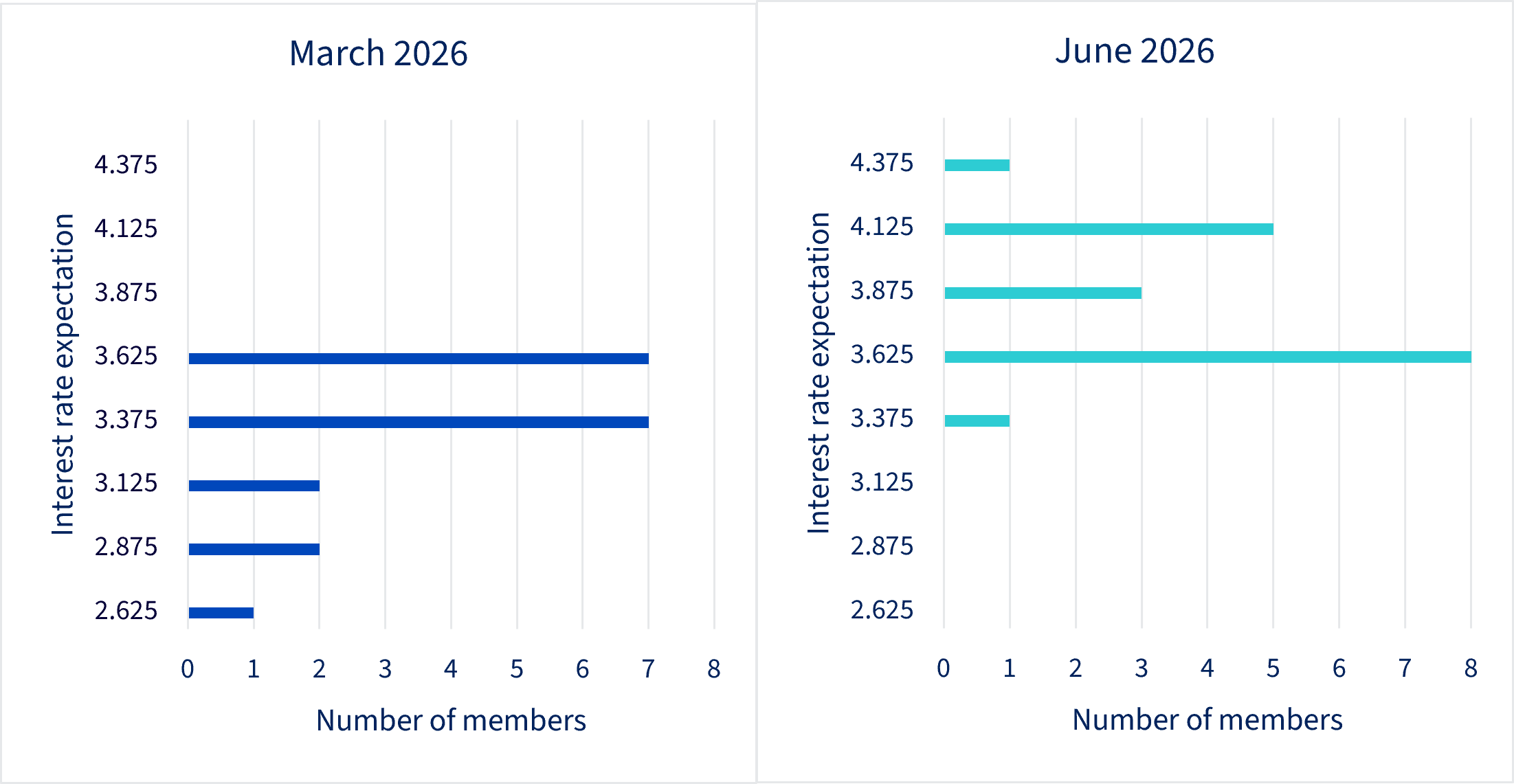
The first FOMC meeting under Chairman Kevin Warsh featured a streamlined policy statement, marking the beginning of a broader reduction in forward guidance. As a result, markets are likely placing greater emphasis on the guidance that remains. The so-called ‘dot plot’, which shows where individual policymakers expect interest rates to be at year-end, revealed that nine of the eighteen participants projected at least one rate hike by the end of 2026 (Figure 1).
Although markets had already been pricing in a rate increase this year, the latest projections reinforced those expectations. Fed funds futures are now pricing a full rate hike as early as October, compared with expectations closer to December prior to the meeting. Strength in the labour market, reflected in firmer payroll growth, alongside persistently elevated inflation readings, has strengthened the case for tighter monetary policy.
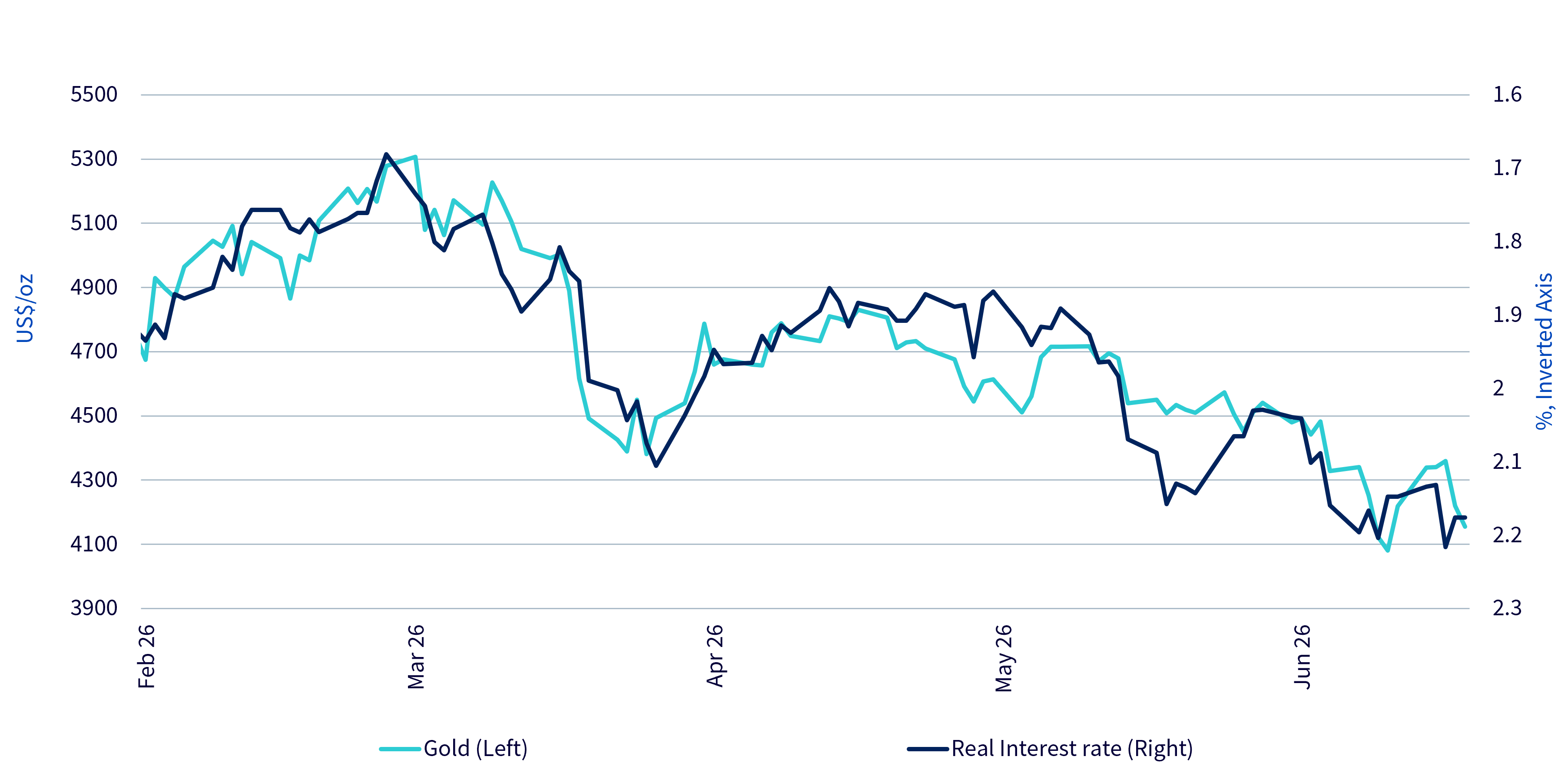
Real rates, as measured by Treasury Inflation-Protected Securities (TIPS) yields, have been rising and have therefore exerted downward pressure on gold in recent months. While gold and real yields appeared to decouple for several years, their historically negative relationship seems to have reasserted itself more recently (Chart 2).
Figure 1: Federal Open Market Committee members' expectations for end-2026 interest rates (March vs June 2026)
Source: Federal Reserve Summary of Economic Projections, 18 March 2026, 17 June 2026, WisdomTree. Historical performance is not an indication of future performance and any investments may go down in value.
Gold and Real Rates
Figure 2: Gold vs real rates (Treasury Inflation-Protected Securities yield)
Source: Bloomberg Finance LP. WisdomTree, February 2026 - June 2026. Historical performance is not an indication of future performance and any investments may go down in value.
Gold and the US Dollar
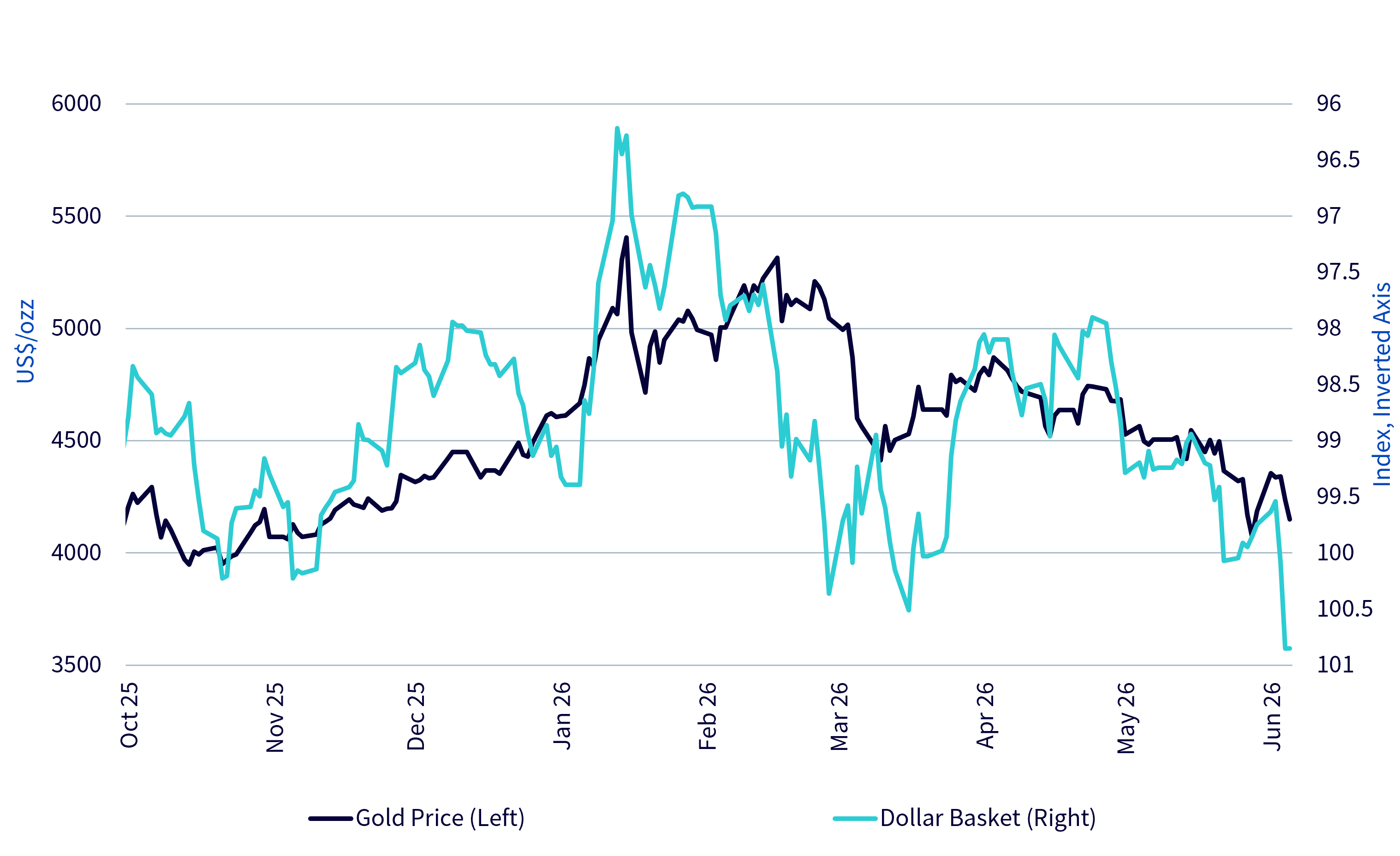
The US dollar has appreciated to its highest level in more than a year. The greenback benefited from the United States' relative energy security during the Iran conflict, particularly compared with other traditional safe-haven currencies.
Assuming the MoU holds and tensions continue to ease, a reduction in energy market tightness could remove some support for the dollar. However, if markets continue to price a more aggressive path for US interest rates, the dollar may remain stronger for longer.
Figure 3: Gold and US Dollar basket
Source: Bloomberg Finance LP. WisdomTree, October 2025 – June 2026. Historical performance is not an indication of future performance and any investments may go down in value.
Central banks remain constructive on gold
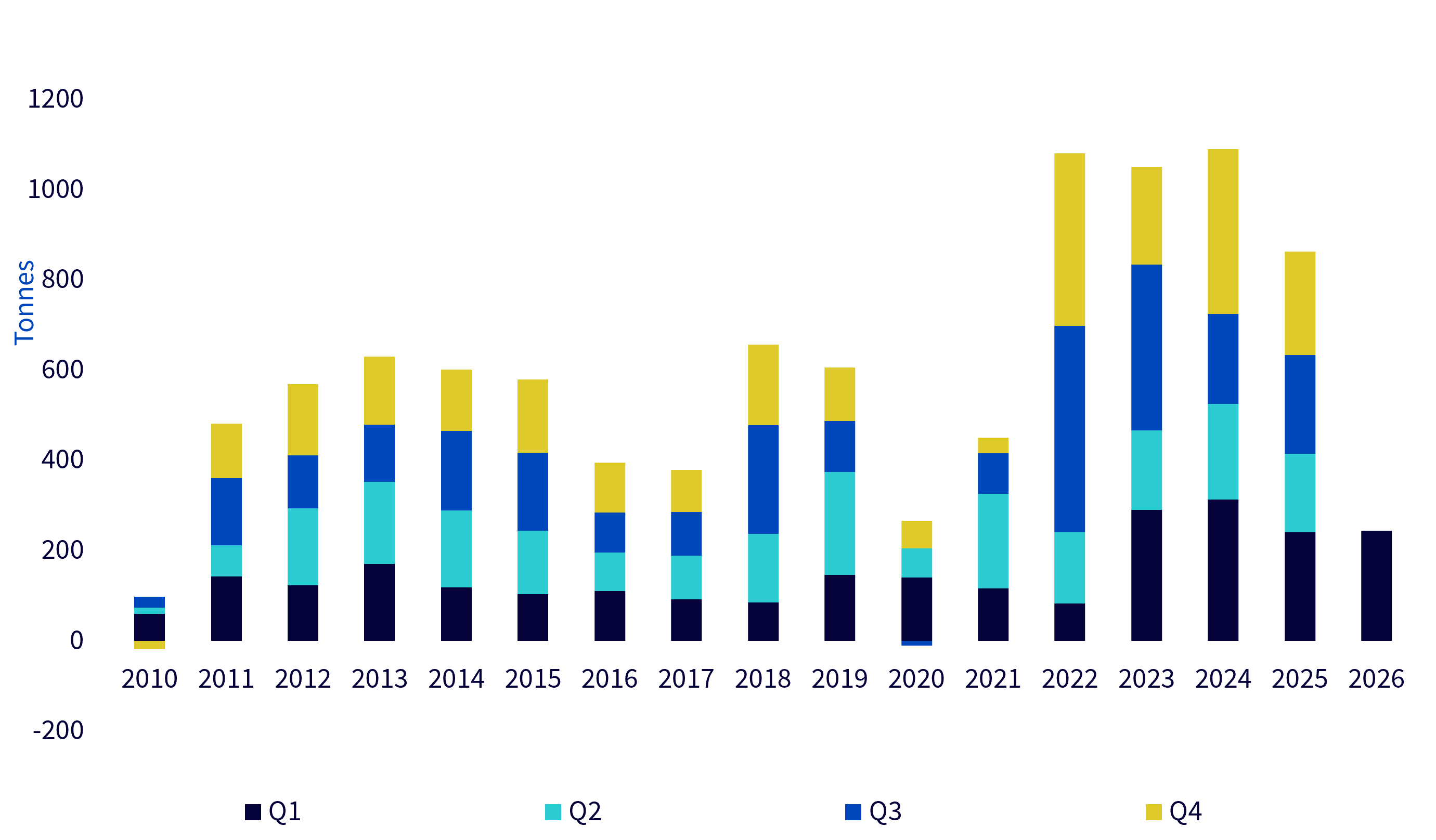
In 2025, central banks purchased less gold by tonnage than in 2024, 2023 and 2022, falling below the 1000 tonne mark for the first time since the Russia-Ukraine war started (Figure 4). However, they spent more than ever on gold purchases because of the higher price environment (we estimate over $95bn in 2025 vs. $84bn in 2024).
Figure 4: Central Bank demand for gold
Source: WisdomTree, World Gold Council, Q1 2010 to Q1 2026. Historical performance is not an indication of future performance and any investments may go down in value.
For those concerned that central bank demand may be weakening, the World Gold Council's latest annual central bank survey provides a useful perspective.
Central banks remain highly constructive on gold. The survey found that 89% of respondents believe that central banks, as a group, will continue to increase their gold holdings over the coming year (Figure 5). None expected aggregate gold holdings to decline. Although a slightly larger proportion than last year expects holdings to remain unchanged (11% in 2026 versus 5% in 2025), which is unsurprising given the substantial increase in gold prices and the larger share of foreign exchange reserves now represented by gold.
Figure 5: Central bank expectations on all central bank gold holdings
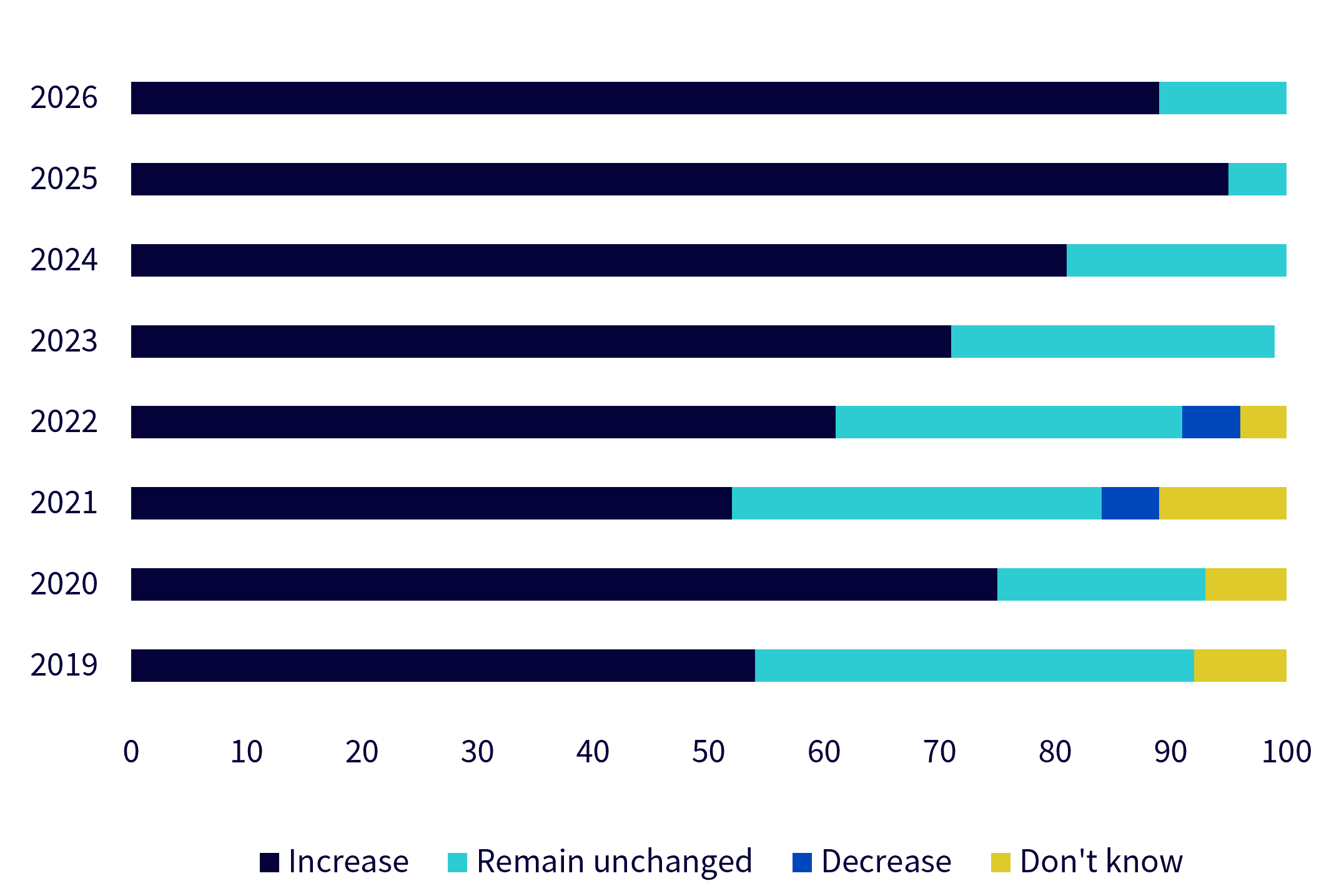
Source: WisdomTree, World Gold Council, Central Bank Gold Reserves Survey 2026. Historical performance is not an indication of future performance and any investments may go down in value.
A record 45% of respondents expect their own institution's gold reserves to increase over the next 12 months (Figure 6). Most of the remaining respondents expect no change, while only 1% anticipate a reduction in holdings. Based on the survey sample, this suggests that only a single central bank indicated an intention to sell gold.
Figure 6: Central bank expectations on their own gold holdings
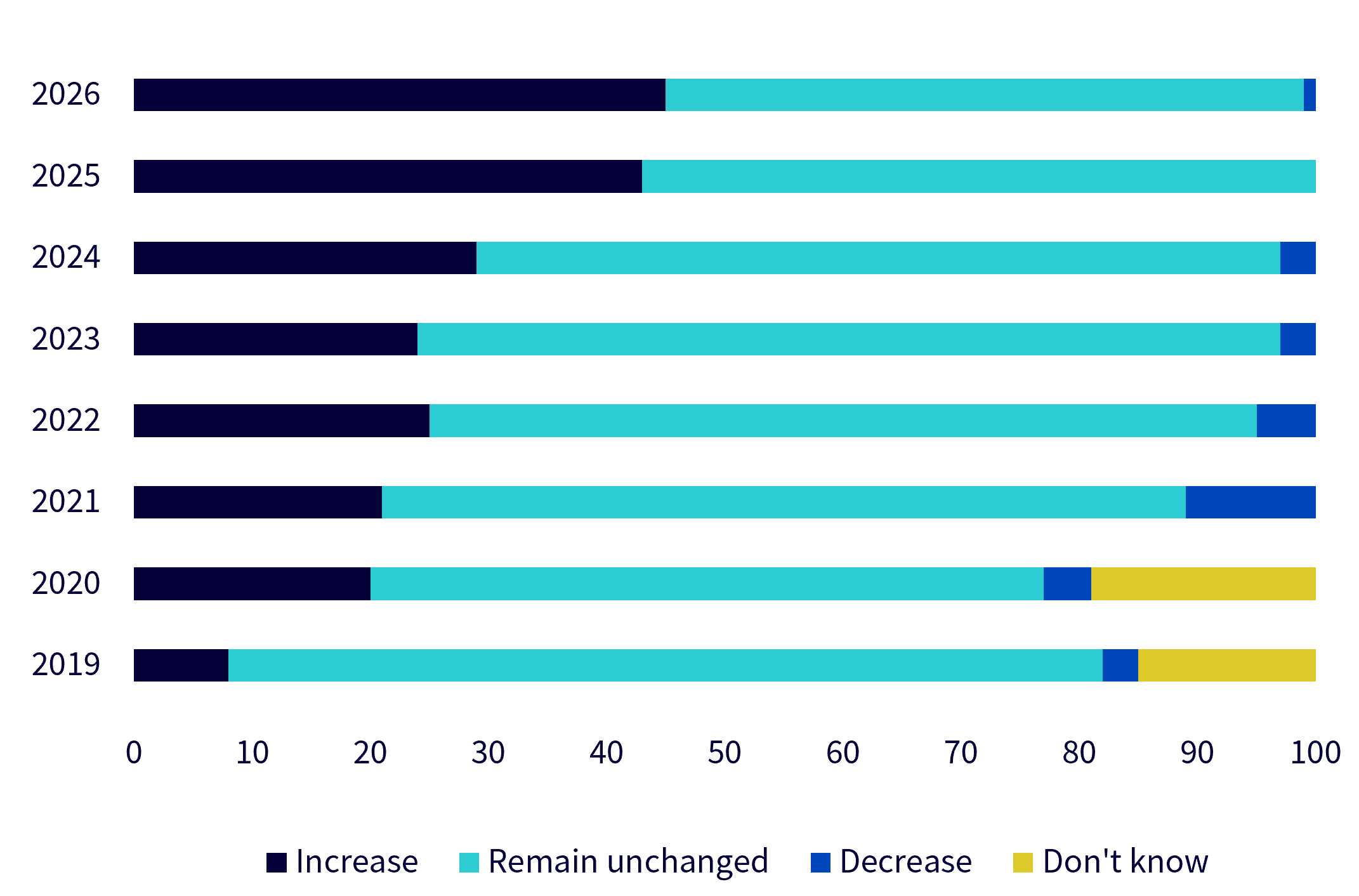
Source: WisdomTree, World Gold Council, Central Bank Gold Reserves Survey 2026. Historical performance is not an indication of future performance and any investments may go down in value.
Investors cooling
In contrast to central banks, investor enthusiasm appears to have cooled relative to the frenzy seen at the start of the year. Net speculative positioning in gold futures has fallen below its long-term average since 2009 (Figure 7), while exchange-traded fund (ETF) flows have generally followed prices lower (Figure 8). The retreat suggests that tactical investors have become increasingly focused on higher real yields and a stronger US dollar, even as structural buyers continue to accumulate gold.
Figure 7: Net speculative positioning in gold futures
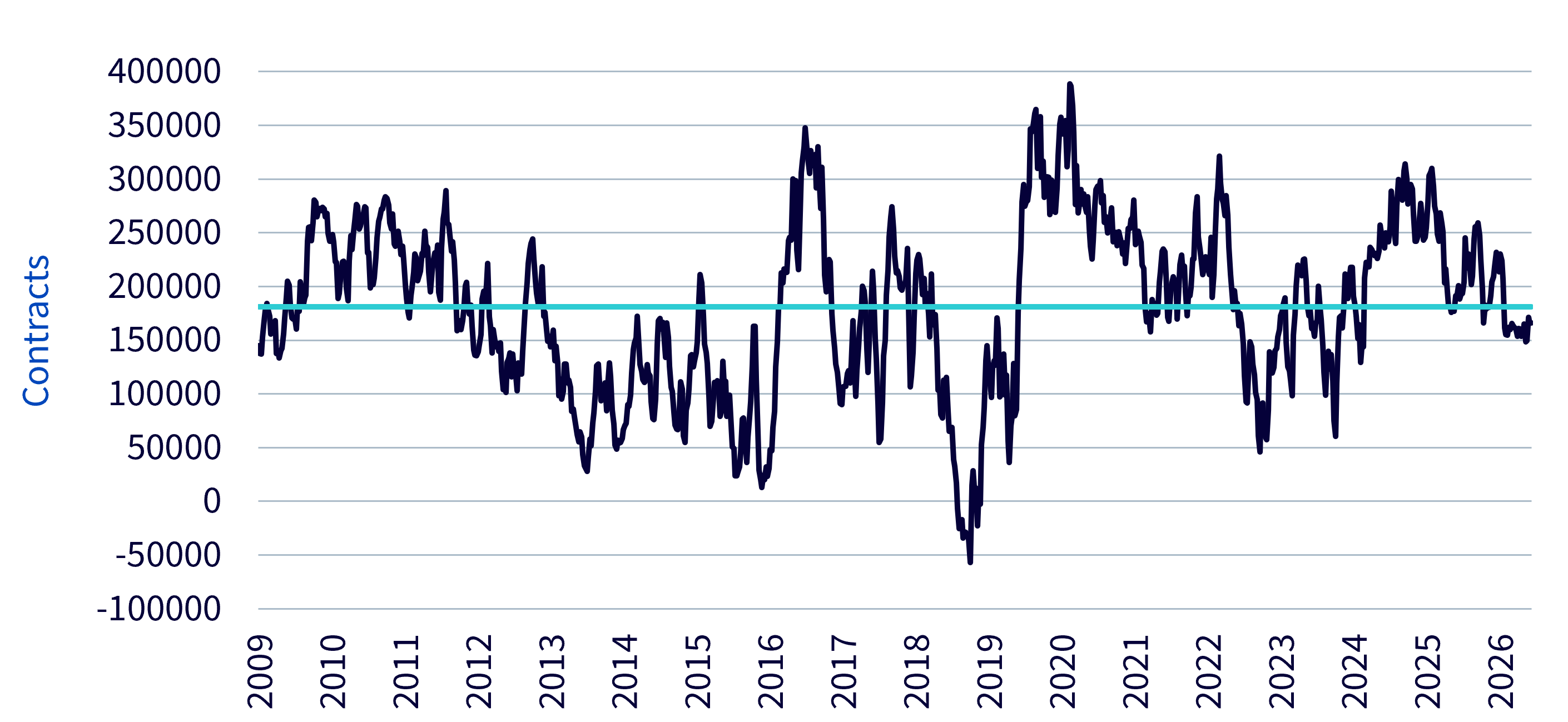
Source: Bloomberg Finance LP. WisdomTree, June 2009 - June 2026. Historical performance is not an indication of future performance and any investments may go down in value.
Figure 8: Gold held in exchange-traded-products (ETPs)
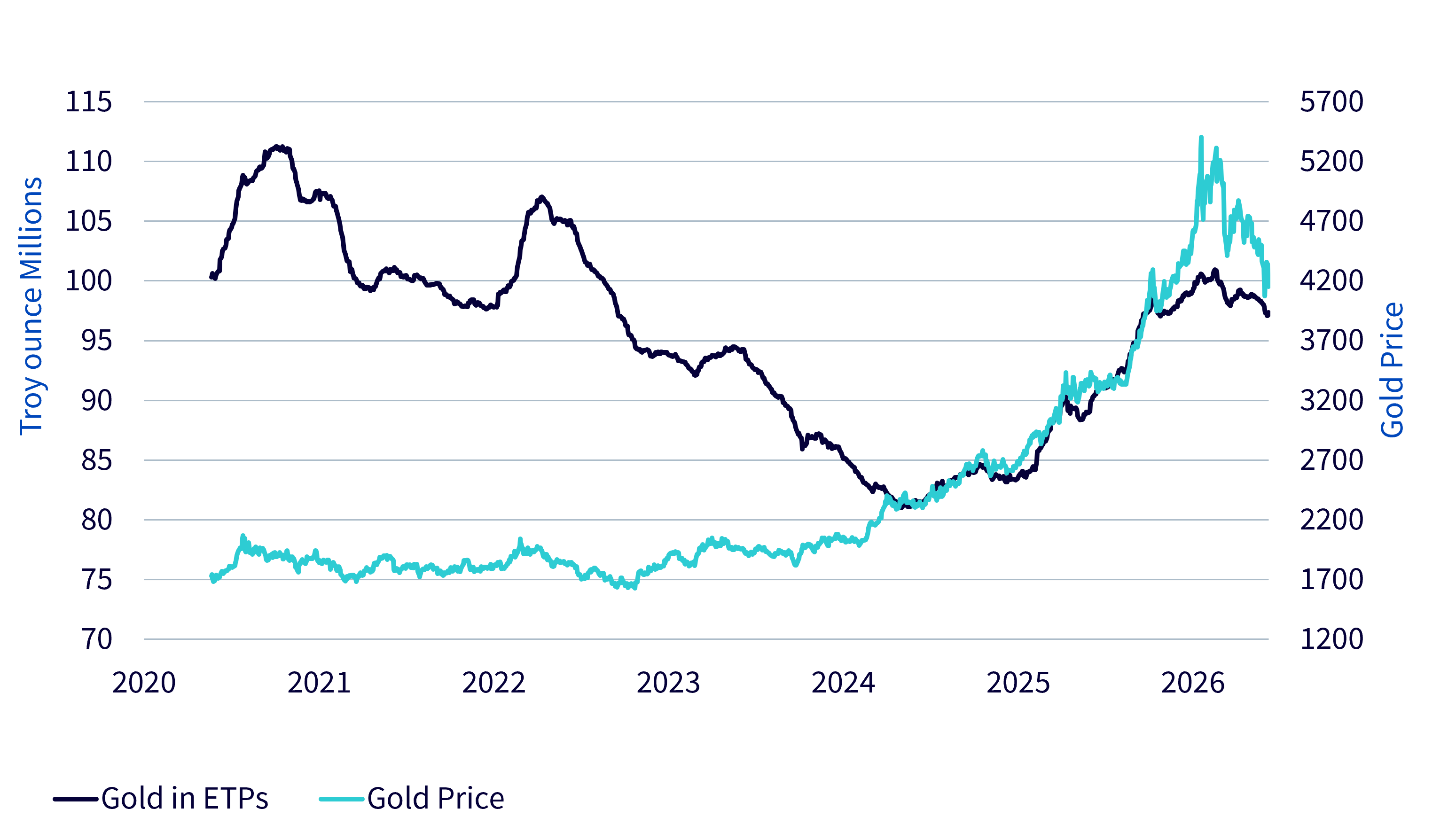
Source: Bloomberg Finance LP. WisdomTree, June 2020 – June 2026. Historical performance is not an indication of future performance and any investments may go down in value.
Long-term risks remain unresolved
We believe the world remains characterised by elevated geopolitical risks and growing financial vulnerabilities. While central banks may be raising interest rates in response to inflationary pressures, government indebtedness continues to rise across many major economies. The tension between tighter monetary policy and deteriorating fiscal positions creates potential fault lines within the global financial system. Although these concerns are not currently being reflected in gold prices, gold is likely to play an important role should these imbalances unwind in a disorderly manner.
Investments in physical gold and gold-related securities are subject to market risk and may fluctuate in value. The price of gold can be affected by changes in interest rates, inflation expectations, currency movements, central bank activity and broader market sentiment. Rising real interest rates and a stronger US dollar have historically weighed on gold prices, although relationships between asset classes can change over time.