




 Print Page
Investing during US un-exceptionalism


Key Takeaways
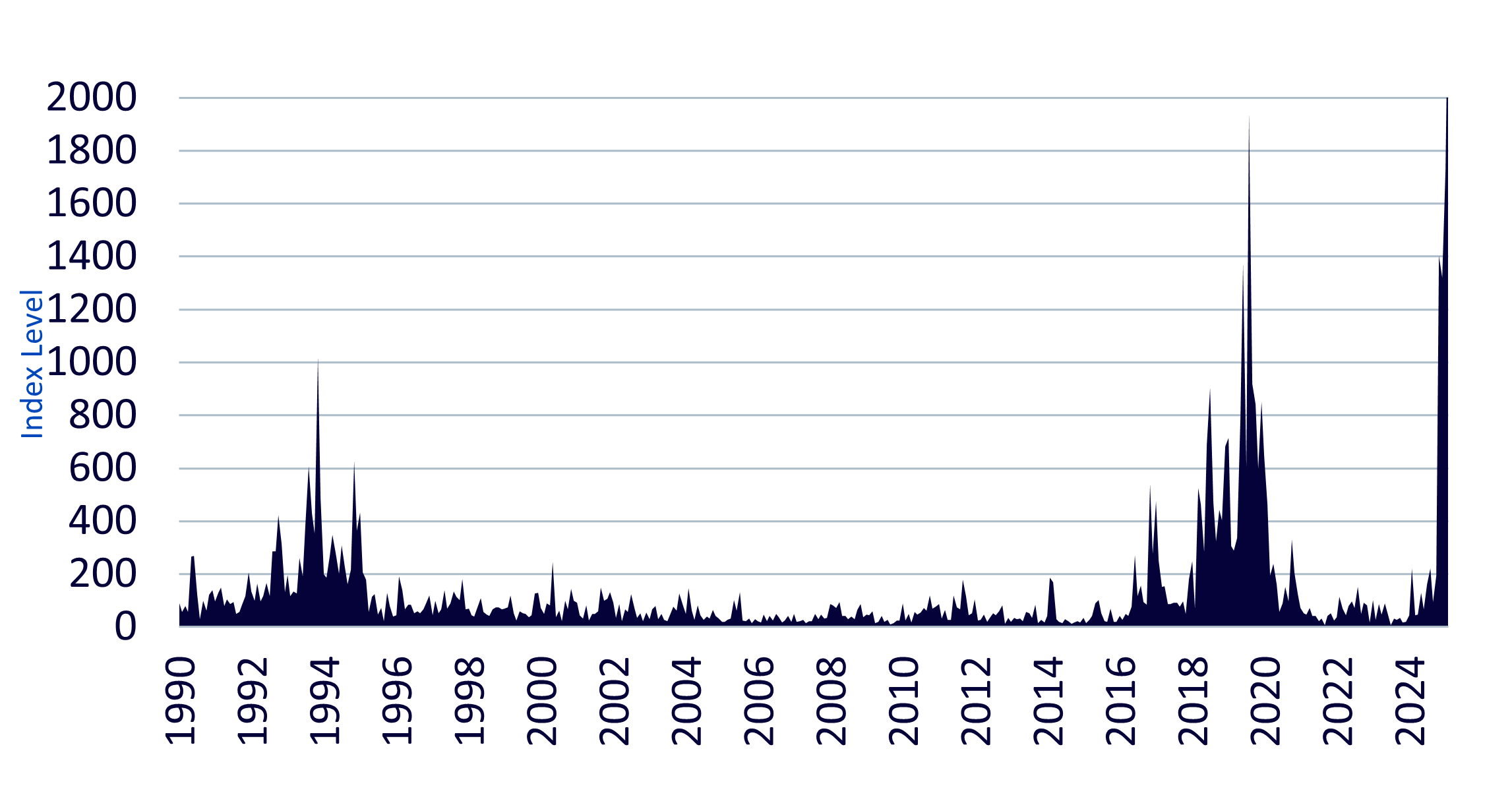
From sharp shifts in tariff policies and unexpected government layoffs to the growing chorus of US fiscal uncertainty measured by the US Economic Policy Uncertainty Index, investors are increasingly seeking safe havens in volatile times.
Figure 1: Economic uncertainty rebounds after Trump’s return to the White House
 Source: Baker, Bloom & Davis, Bloomberg, WisdomTree, monthly data available as of close 28 February 2025. Historical performance is not an indication of future performance and any investments may go down in value.
Steering towards income
In an era where trade tensions and economic headwinds are the norm, investors are increasingly turning to time-tested strategies to secure their financial future. One strategy gaining traction amid today’s volatility is the focus on dividend stocks—a classic defensive play that offers both the potential for capital appreciation and a steady income stream. The high dividend factor is synonymous with an investment strategy that gains exposure to companies that appear undervalued and have demonstrated stable and increasing dividends.
Stalwart names in consumer staples, utilities, industrials and healthcare—sectors renowned for their stability—are posting impressive gains even as the mega cap tech stocks falter. Investors are now gravitating toward companies with solid dividend records. With these mature companies delivering regular cash payouts, dividend-focused investments are emerging as a safe haven, attracting higher inflows amid market uncertainty.
The dual benefits of capturing market gains when share prices rise and cushioning downturns with consistent dividends are increasingly appealing. Early warning signs of an economic slowdown—from rising credit card delinquencies to an uptick in jobless claims—highlight the broader challenges that could impact consumer spending and overall market momentum.
De-risking your equity portfolio with the dividend factor
WisdomTree’s two unique strategies incorporating dividends have provided a beacon of stability during the recent sell-off across US equities. Strategies with a smaller focus on the Magnificent Seven, a higher focus on value or dividend stocks, and higher defensiveness could be a worthwhile addition to investors' portfolios currently.
- Strategy 1: WisdomTree US Equity Income UCITS ETF (DHS) offers access to a portfolio of high dividend paying US stocks. The strategy focuses on the 30% of the stocks with the highest dividend yield in a universe of US stocks where low quality stocks have already been screened out.
- Strategy 2: WisdomTree US Quality Dividend Growth UCITS ETF (DGRA) offers access to a portfolio of high quality, dividend companies in the US by selecting dividend paying companies with the best combined rank of earnings growth, return on equity, and return on assets within an ESG-filtered universe of companies with sustainable dividend policies.
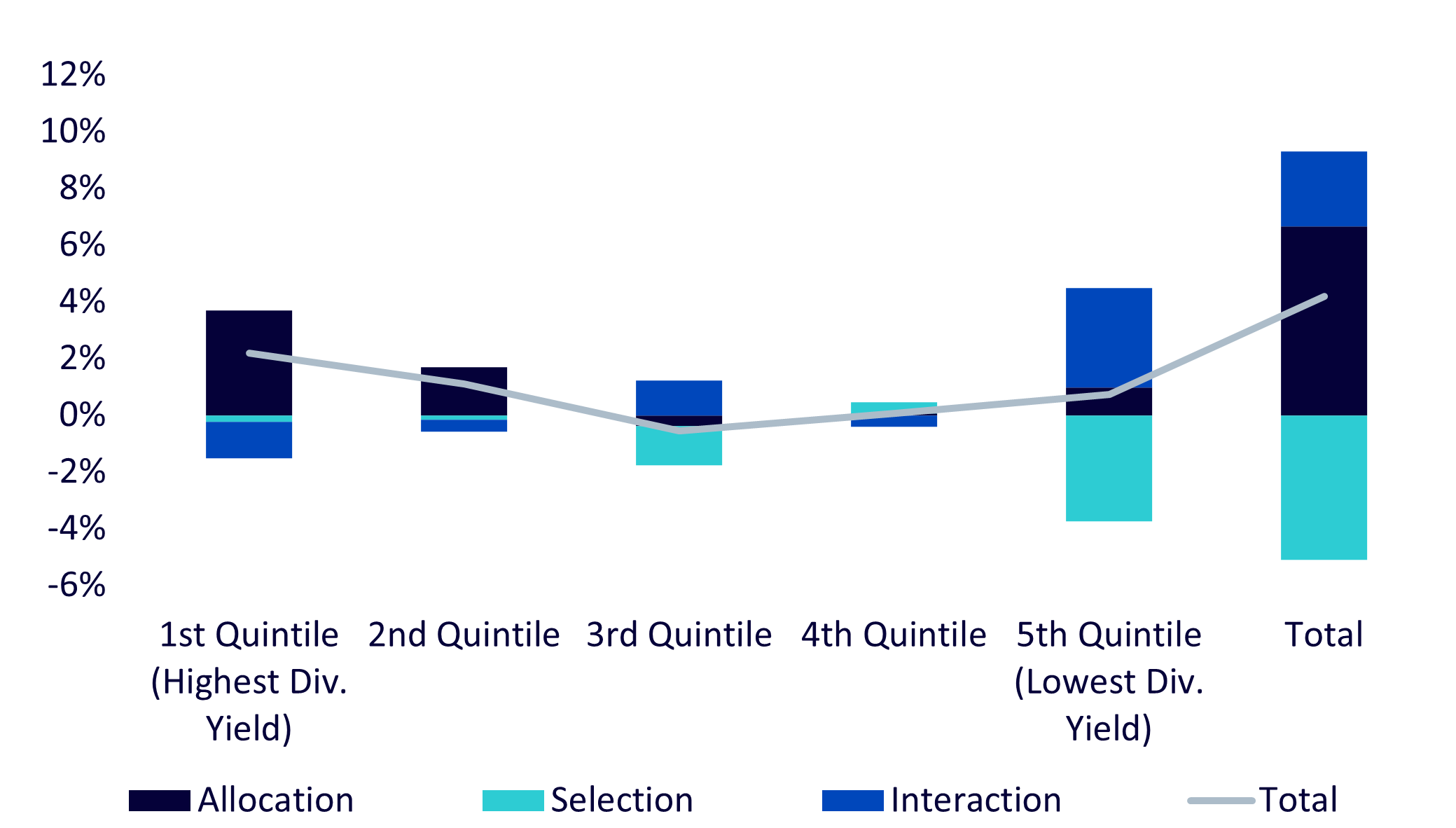
Over the prior quarter, the WisdomTree US Equity Income Index outperformed the S&P 500 Index by 4.2%1. As illustrated in the dividend yield attribution, the higher allocation to the highest dividend yielding quintile has been positive, contributing to the tracking difference by 2% over the prior quarter.
Figure 2: WisdomTree US Equity Income UCITS Index – dividend yield attribution (quarter-to-date)
Source: FactSet, WisdomTree from 31 December 2024 to 28 February 2025. Historical performance is not an indication of future performance and any investments may go down in value.
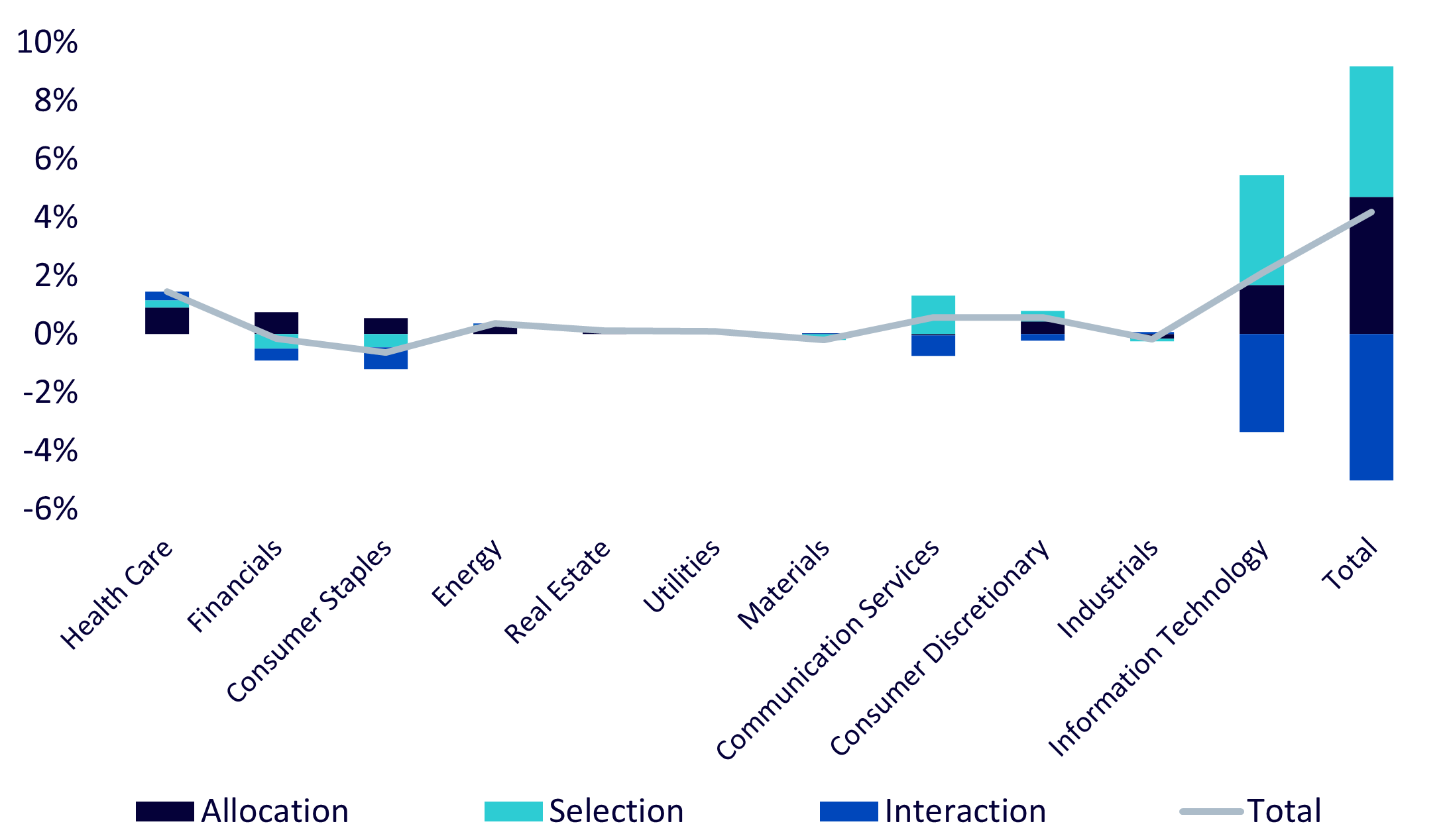
While the Magnificent Seven2 stocks have declined 6% over the prior quarter3, the selection of stocks of the WisdomTree US Equity Income Index within the communication services sector contributed to 1.32% tracking difference versus the S&P 500 Index. In addition, the higher allocation to more cyclically oriented value sectors such as healthcare, financials and consumer staples helped the WisdomTree US Equity Income UCITS Index outperform the S&P 500 Index by 4.2% over the prior quarter4.
Figure 3: WisdomTree US Equity Income UCITS Index – sector attribution (quarter-to-date)
Source: FactSet, WisdomTree from 31 December 2024 to 28 February 2025. Historical performance is not an indication of future performance and any investments may go down in value.
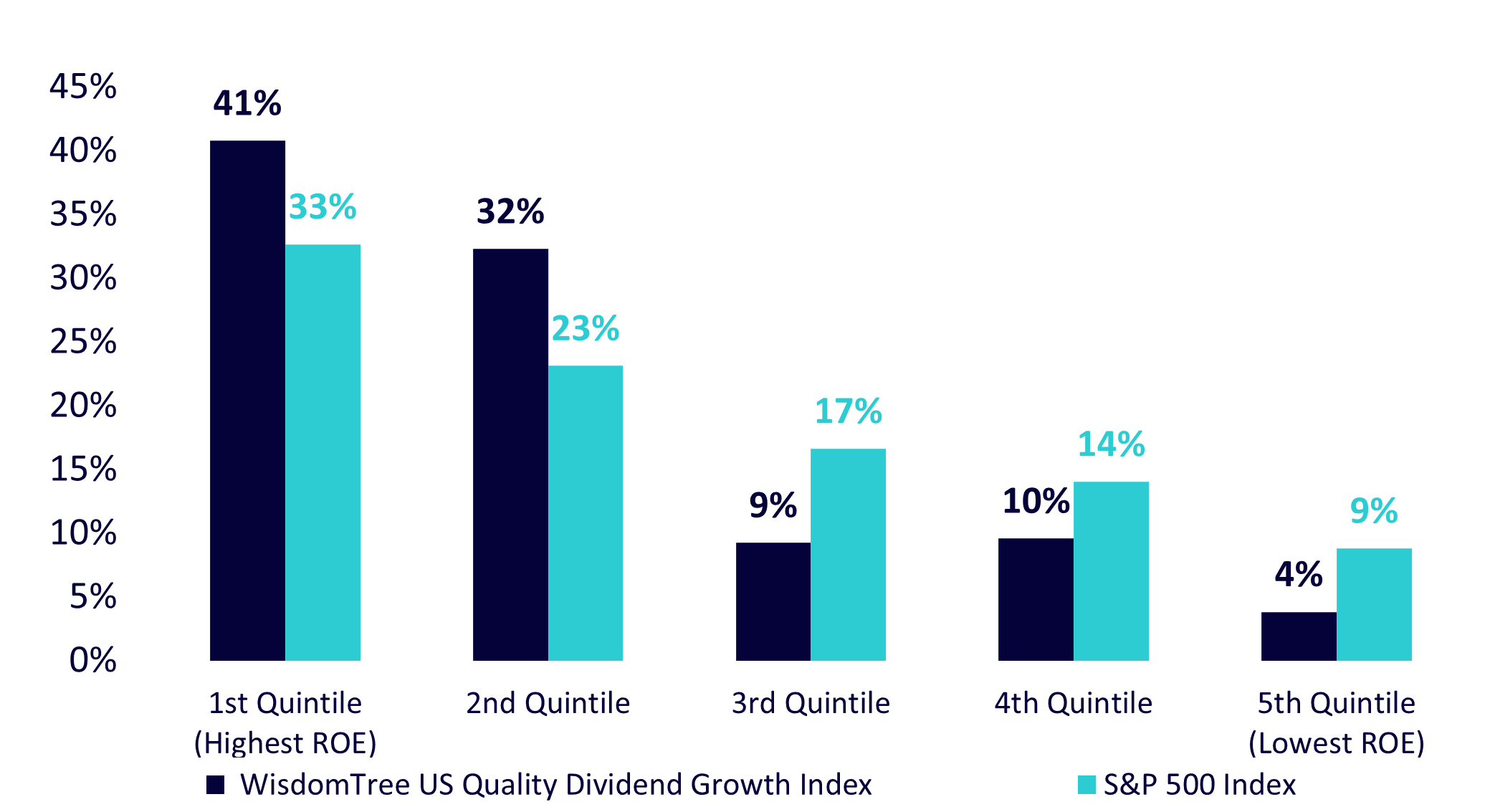
WisdomTree creates strategies to add value for investors. The WisdomTree US Quality Dividend Growth UCITS ETF (DGRA) aims to invest in high-quality, dividend-paying companies whose profitability and growth prospects are higher than market dividend growth. The allocation of weights is focused on the highest return on equity quintiles as illustrated in Figure 4. By focusing on dividend payers with high quality metrics, investors gain access to a portfolio concentrated on highly profitable dividend growers with reasonable valuations.
Figure 4: WisdomTree US Quality Dividend Growth UCITS Index – return on equity quintile (quarter-to-date)
 Source: FactSet, WisdomTree from 31 December 2024 to 28 February 2025. Historical performance is not an indication of future performance and any investments may go down in value.
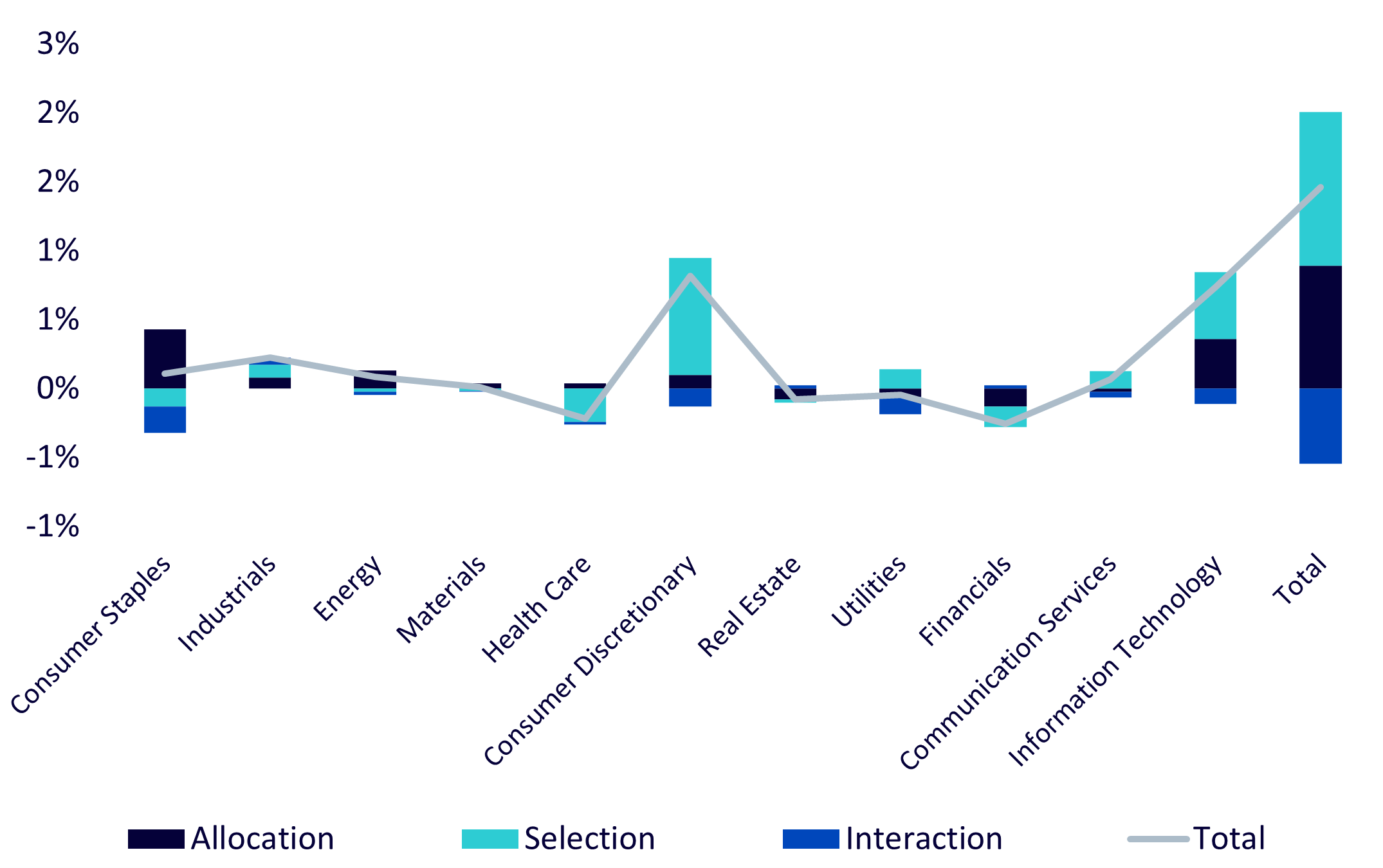
Over the prior quarter, the selection of stocks of the WisdomTree US Quality Dividend Growth UCITS Index within the consumer discretionary and information technology sectors contributed to the 1.3% tracking difference versus the S&P 500 Index5. In addition, the higher allocation towards consumer staples and industrials contributed towards the 1.1% tracking difference versus the S&P 500 Index5. Overall, the WisdomTree US Quality Dividend Growth UCITS Index outperformed the S&P 500 Index by 1.8% over the prior quarter.
Figure 5: WisdomTree US Quality Dividend Growth UCITS Index – sector attribution (quarter-to-date)
Source: FactSet, WisdomTree from 31 December 2024 to 28 February 2025. Historical performance is not an indication of future performance and any investments may go down in value.
1FactSet, WisdomTree average price performance from 31 December 2024 to 28 February 2025
2Magnificent Seven is a group of mega cap stocks: Apple, Alphabet, Microsoft, Amazon.com, Meta Platforms, Tesla and Nvidia.
3Bloomberg, from 31 December 2024 to 28 February 2025
4FactSet, WisdomTree from 31 December 2024 to 28 February 2025
5Source: FactSet, WisdomTree from 31 December 2024 to 28 February 2025.



 Previous Post
 All Posts