




 Print Page
Five post-CES ideas for thematic investing in 2026


Key Takeaways
- CES 2026 highlights AI’s shift from digital experimentation to large-scale deployment in the real economy.
- CES highlights that scaling AI now depends on physical infrastructure investment, not just breakthroughs in models or chips.
- Physical AI, including robotics and autonomous systems, marks the next phase of growth as AI moves from the cloud into production environments.
- Rapid data centre expansion is increasing power constraints, bringing nuclear energy, grid investment, and uranium enrichment into sharper focus.
- Critical materials such as rare earths and copper are becoming increasingly important as AI drives electrification, automation, and infrastructure buildout.
- Quantum computing is moving from long-term roadmaps toward early commercial relevance, supporting a diversified, long-term investment approach.
The Consumer Electronics Show (CES) is one of the world’s largest and most influential technology gatherings, bringing together global tech innovators. While often associated with consumer gadgets, CES has increasingly become a forum where longer-term technology roadmaps, capital spending priorities, and policy-aligned innovation trends come into focus. For investors, CES offers valuable signals about which technologies are moving from concept to commercialisation, and which ecosystems are attracting sustained investment.
This artificial intelligence (AI) evolution creates new investment opportunities and prompts deeper thinking about what could happen next. Looking toward 2026, here are five CES-inspired themes that stood out to WisdomTree’s Research Team for 2026.
AI infrastructure: from breakthrough models to physical scale
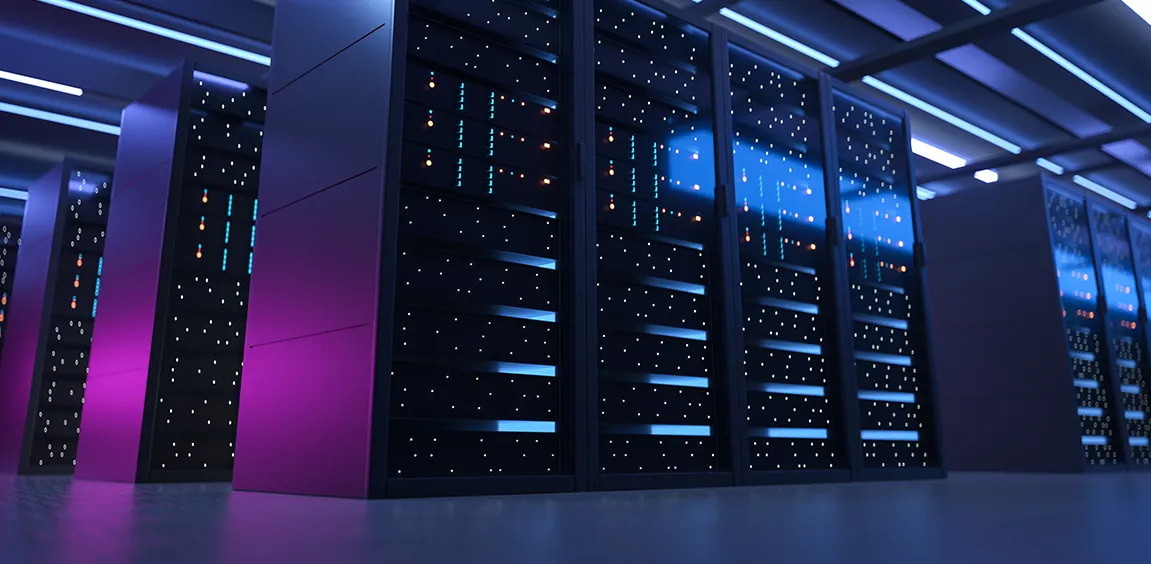
AI infrastructure was one of the clearest signals from CES, with Nvidia’s keynote illustrating how artificial intelligence is reshaping computing from the ground up. As industries modernise, research and development budgets are increasingly shifting toward AI, while breakthroughs in foundation models, accelerated by open-source momentum such as DeepSeek, are driving rising demand from both hyperscalers and enterprises. Agentic AI is redefining how software is built and deployed, but CES made clear that these advances depend on sustained investment in physical infrastructure.
Nvidia’s Vera Rubin platform highlighted how extreme system-level co-design is pushing beyond traditional semiconductor constraints. Despite only a ~1.6x increase in transistor count versus Blackwell, Rubin delivers roughly a 5x improvement in floating-point performance and up to a 10x increase in throughput per watt, underscoring that efficiency gains are becoming as important as raw compute.
Crucially, the AI story is not written by next-generation chips alone. Jensen Huang emphasised the critical role of networking and memory in enabling thousands of graphics processing units (GPUs) to operate as a single system. AMD reinforced this with its expanding data-centre accelerator and rack-scale roadmap, Marvell highlighted the growing importance of high-speed interconnects, optics and Compute Express Link (CXL) for large-scale data movement, and SK Hynix underscored the role of memory in unlocking the full potential of large-scale next-generation AI systems. Investment in AI infrastructure is driven by real, accelerating demand, with capacity buildouts by leading technology companies reflecting utilisation already outstripping supply, not speculative excess. This, in turn, creates growth opportunities across various layers of the AI infrastructure ecosystem, with compelling returns not concentrated just in the current AI mega caps.
 |
“2025 was brilliant in highlighting how an investment portfolio can benefit from exposure to less prominent AI names. While valuations in certain areas of the ecosystem definitely warrant selectivity, as investor excitement runs ahead of fundamentals, AI currently remains the most powerful driver of global growth, and a diversified exposure across AI infrastructure leaders offers a compelling way to participate in the core enablers of this megatrend.” – Elvira Kuramshina, Associate Director, Quantitative Research, WisdomTree. |
Physical AI takes centre stage at CES 2026
Physical AI dominated the spotlight at CES 2026. Nvidia set the tone, with Chief Executive Officer Jensen Huang declaring the ‘ChatGPT moment for physical AI’ has arrived, as machines begin to perceive, reason and act in the physical world. Nvidia continues to expand its robotics ecosystem with foundation models such as Cosmos for simulation and GR00T for humanoid intelligence, alongside training tools and hardware. Nvidia also announced a deeper push into autonomous driving with the launch of its Alpamayo autonomous vehicle (AV) reasoning stack.
Boston Dynamics showcased its Atlas humanoid robot and Hyundai announced plans to deploy Atlas in factories as soon as 2028, expanding into more complex tasks by 2030, supported by partnerships with Google DeepMind. Elsewhere, Arm announced the launch of a dedicated Physical AI unit and Mobileye acquired Mentee Robotics, further signalling the continued shift in AI from the cloud to the real world.
 |
“Since the release of ChatGPT and large language models, most AI innovation has been confined to the digital ecosystem. Physical AI represents the transition from the cloud to the real economy, extending AI innovation into sectors that drive the majority of economic value.” – Blake Heimann. Senior Associate, Quantitative Research, WisdomTree. |
Nuclear links CES’s AI hype to US energy action
CES 2026 ended up being dominated by AI, but the energy behind AI infrastructure is getting its own moment, with nuclear increasingly visible. Doosan’s CES showcase highlights small modular reactors (SMRs) as one route to meeting surging data centre power demand. Outside the exhibition halls, Doosan is also working with Amazon and X-energy to accelerate SMR deployment in the US, again linked to data centre needs. The timing is telling. Just before CES opened, the US Department of Energy awarded new uranium enrichment contracts, including support linked to Centrus Energy. That matters because Russia still supplies roughly a quarter of the US' enriched uranium supply1, and US waivers for Russian uranium imports expire in 2028. Firms expanding enrichment capacity could become critical to easing a fuel cycle bottleneck as US nuclear build plans scale.
 |
“CES celebrates what AI can do. The harder question is what powers it. Nuclear is re-entering the conversation as firm power for data centres, and Washington’s uranium enrichment push signals the fuel supply chain is now strategic infrastructure.” – Baoqi Zhu, Senior Associate, Quantitative Research & Multi Asset Solutions, WisdomTree. |
From humanoids to data centres: the critical materials behind AI
CES 2026 reinforced that the next phase of the AI cycle is becoming more ‘real economy’ than purely digital. Alongside humanoids and robotics, the show was dominated by the scale up challenge: more data centres, more power demand, more cooling, more grid investment. That matters for critical minerals in two ways. First, rare earth permanent magnets (NdPr, plus Dy/Tb for high heat performance) remain a key input for high efficiency motors in robotics, automation and industrial electrification. Second, the copper surge reflects that AI is increasingly constrained by electricity delivery, not computing demand. Data centres need heavy-duty grid upgrades and transmission equipment, and that buildout is copper-intensive.
Taken together, CES points to a twin demand engine for critical minerals: (1) physical AI and advanced manufacturing and (2) AI infrastructure, electrification and grid capex, both supportive for the strategic case around rare earths within a broader ‘materials for intelligence’ theme.
 |
“As AI moves into the real economy, the winners won’t just be the software layer. The enabling materials and chips that power motors, compute and energy management are critical, especially when supply chains are concentrated and security becomes part of the investment case.” – Aneeka Gupta, Director, Macroeconomic Research, WisdomTree. |
Quantum computing: from roadmaps to real-world momentum
CES 2026 introduced CES Foundry, a special program bringing AI and quantum innovation together under one roof and reinforcing quantum’s strategic relevance. Sessions from industry leaders such as IBM and D-Wave highlighted tangible progress in the field. In 2026, IBM’s focus is on demonstrating quantum advantage in meaningful tasks, while targeting its first fault-tolerant system, Starling, in the longer term by 2029. The company noted that achieving quantum advantage across various use cases will require parallel advances in hardware and innovations in algorithms, with broad access to quantum systems critical for accelerating experimentation and discovery.
Meanwhile, D-Wave showcased practical quantum applications live at CES, highlighting both the complexity of quantum hardware and the role of a broader ecosystem of enabling players. The company demonstrated how quantum-classical approaches allow businesses to harness quantum capabilities today through quantum annealing, ahead of fully universal systems. Other quantum-focused CES sessions covered quantum unlocking tomorrow’s breakthroughs, underscoring the importance of standards development and the transition toward quantum-safe encryption as adoption progresses.
|
“CES demonstrated that momentum in quantum computing is accelerating, with growing focus on translating the technology into real business outcomes. We remain in the early innings of this revolutionary field and its potential to transform the global economy. At this stage, a longer investment horizon and a diversified approach are key to managing risks while unlocking long-term growth.” – Elvira Kuramshina, Associate Director, Quantitative Research, WisdomTree. |
Conclusion
CES 2026 was a clear signal that AI has moved decisively to large-scale, real-economy deployment, supported by massive investment in infrastructure, energy, materials and new computing paradigms. The most compelling opportunities are emerging not from a single technology, but from interconnected ecosystems spanning AI hardware, physical automation, power generation and next-generation computation.
1 Source: U.S. Energy Information Administration.











 Previous Post
 All Posts