





 Print Page
Trump fuels a nuclear resurgence


Key Takeaways
“If it were ever possible to control at will the rate of disintegration of the radio elements, an enormous amount of energy could be obtained from a small amount of matter.” – Ernest Rutherford, British physicist considered the father of nuclear science for his contribution to the theory of atomic structure (1904).
The story of nuclear energy begins with the ancient Greek idea that all matter is made of indivisible atoms. But it wasn’t until the late 19th and early 20th centuries that scientists began unlocking the atom’s secrets. In 1896, Henri Becquerel discovered radioactivity, followed by Marie and Pierre Curie’s work on isolating radioactive elements. Ernest Rutherford’s experiments later revealed the atom’s nucleus, laying the foundation for nuclear reactions.
The real turning point came in 1938 when German scientists Otto Hahn and Fritz Strassmann discovered nuclear fission—splitting an atom’s nucleus to release energy. This breakthrough led to the first nuclear reactor in 1942, overseen by Enrico Fermi in Chicago. First used for warfare, nuclear energy soon found peaceful applications, powering homes and cities. The potential Rutherford imagined was now real—a transformative force in science and society.
But nuclear energy’s journey has been far from smooth. High-profile accidents sparked public backlash and led to widespread shutdowns, especially after Fukushima in 2011.
In our thematic outlook earlier this year, we noted how this was beginning to change. Big tech is now investing heavily in nuclear to fuel energy-hungry data centres. We also suggested Trump could play a role, as deregulation enables faster innovation and increases the need for sustainable energy sources.
Now, Trump has made a bold move and markets are paying attention.
Trump's executive orders
On 23 May 2025, President Donald Trump signed a series of executive orders designed to dramatically expand the United States’ nuclear energy capacity and reassert American leadership in the field. Under the banner of Reinvigorating the Nuclear Industrial Base, Trump set an ambitious goal: to quadruple nuclear capacity from 100 gigawatts to 400 gigawatts by 2050. This includes plans for power uprates to existing plants, construction of 10 new large reactors by 2030, and sweeping reforms to the Department of Energy (DOE) and Nuclear Regulatory Commission (NRC). The orders call for licensing decisions within 18 months for new reactors and greater flexibility in testing and deploying advanced nuclear technologies.
The rationale behind the move is both strategic and economic. The US has seen its share in the global nuclear landscape diminish, with 87% of new reactors since 2017 based on foreign designs. Trump's orders seek to reverse this trend by revitalising domestic fuel cycles, supporting the development of small modular and advanced reactors, and expanding the nuclear workforce. The initiative also includes efforts to restart closed plants for defence purposes and streamline environmental reviews. As the Nuclear Energy Institute noted, these measures are vital for energy independence and national security, positioning nuclear power at the core of America's future energy strategy1.
The market reaction says it all
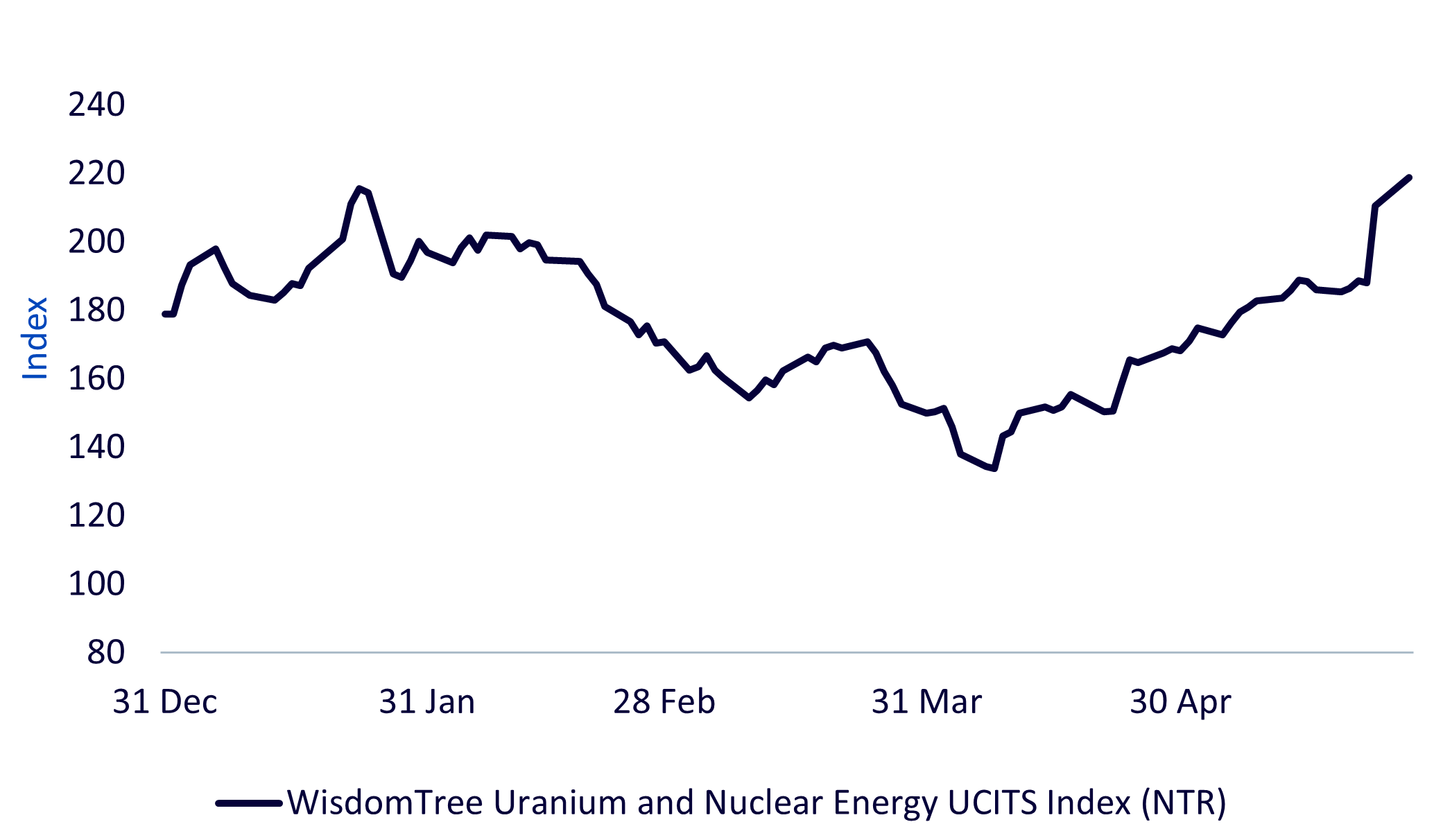
Figure 1: The sharp recovery in the nuclear theme signifies market optimism
Source: WisdomTree, Bloomberg, data as of 28 May 2025, NTR stands for net total return. Historical performance is not an indication of future performance, and any investments may go down in value.
Most themes with significant US exposure faced headwinds in the first quarter of the year, and ‘uranium and nuclear energy’ was no exception. However, the theme’s recovery in the second quarter has been noteworthy. The market reaction to Trump’s executive order has been strikingly positive.
At WisdomTree, we view the uranium and nuclear value chain in three segments: upstream companies (typically miners and producers of nuclear fuels like uranium), midstream companies (providers of essential products and services to the nuclear industry), and innovators (developers of advanced technologies like small modular reactors).
Looking at the top-performing stocks in the WisdomTree Uranium and Nuclear Energy UCITS Index by total return year-to-date, we see an interesting mix of companies:
Figure 2: Top performing stocks in the WisdomTree Uranium and Nuclear Energy UCITS Index by total return year-to-date
Source: WisdomTree, Bloomberg, data as of 28 May 2025. Returns shown in USD. Historical performance is not an indication of future performance, and any investments may go down in value.
From the table above, it’s clear that market interest this year spans a broad range of companies, not just uranium miners. It also includes firms developing advanced nuclear technologies like small modular reactors. Many such developers of advanced technologies, such as Oklo, are not yet generating revenue, as small modular reactors are still in early stages of deployment, but they are attracting strong investor interest due to their transformative potential. Markets are viewing these companies increasingly favourably in light of Trump’s executive order, which is seen as a catalyst that could accelerate development and drive lasting impact.
Conclusion
Trump’s executive order cements nuclear energy’s place among the mainstream technologies expected to power the world’s rapidly growing energy needs. It also marks a clear inflection point in sentiment, building on the momentum that began with tech companies embracing nuclear last year. We believe the market reaction underscores the strong opportunity for investors across the uranium and nuclear energy value chain.
1World Nuclear News, 24th May 2025.




 Previous Post
 All Posts