




 Print Page
The electric revolution: powering a new era of metals demand


Key Takeaways
- Electricity demand surge: global electricity consumption is projected to grow 22% by 2030, reversing decades of stagnation in developed nations.
- Data centres drive growth: data centre electricity use could increase nine-fold by 2030, becoming a major global power consumer.
- Copper demand rising: copper will be essential for electrification, with demand projected to grow 2.5% annually through 2034.
- Massive infrastructure investment needed: achieving net-zero emissions will require $21 trillion in grid investment and a doubling of transmission lines by 2050.
The global economy stands at a pivotal inflection point, with electricity consumption poised for significant growth after decades of stagnation in developed nations. This shift, driven by technological advancements and the energy transition, will fundamentally reshape the mining cycle and create substantial demand for base metals.
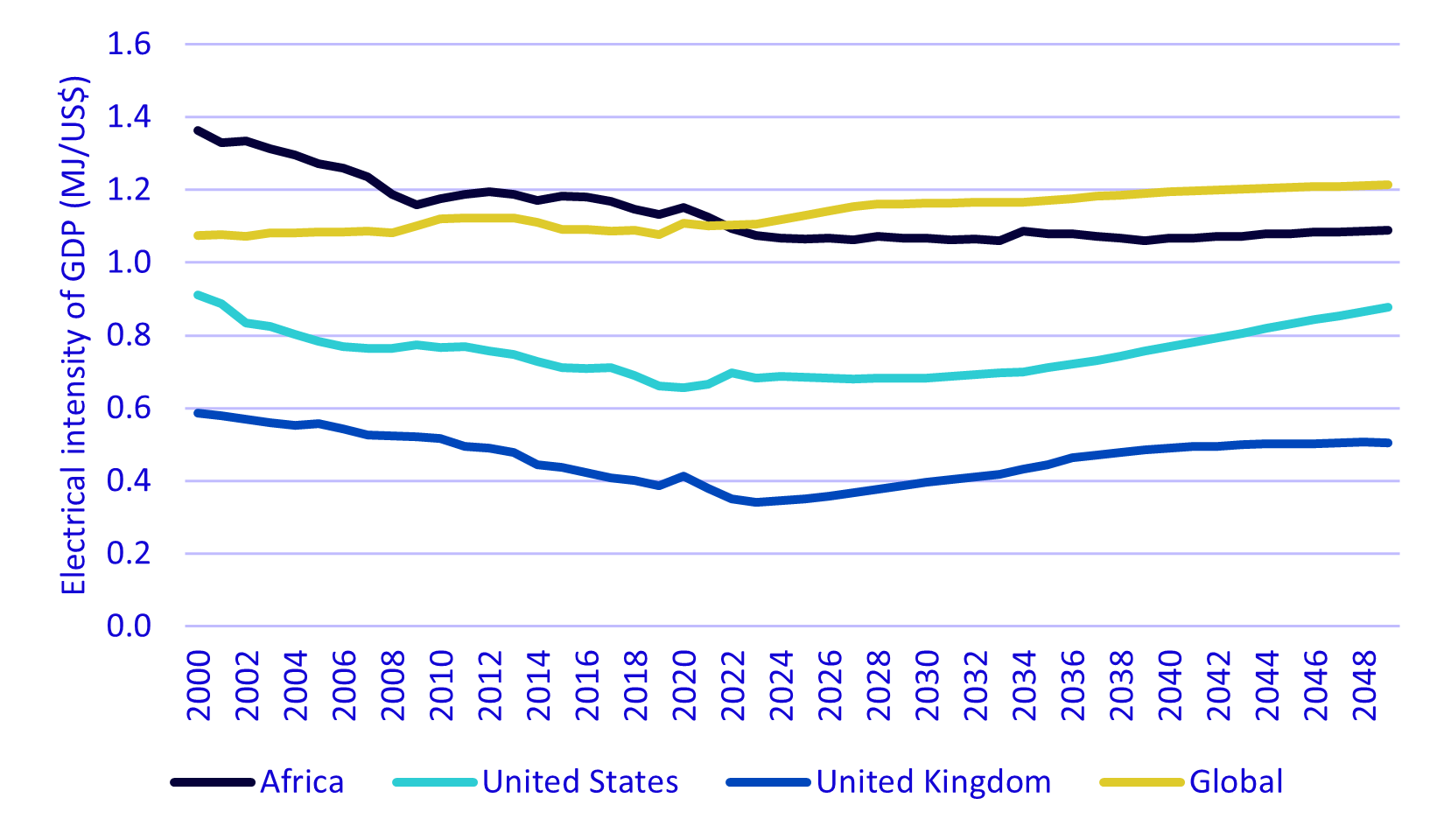
After a quarter-century of decoupling between electricity demand and GDP1 growth across much of the developed world, we're witnessing a reversal of this trend. The economy is becoming increasingly electrified, with the electricity intensity of GDP growth on the rise (see Figure 1).
Figure 1: The electrical intensity of GDP has hit an inflection point
 Source: Wood Mackenzie, March 2025.
This transformation is not merely a result of government policy but is deeply rooted in technological progress, encompassing electrification, the proliferation of data centres, and the broader energy transition.
By 2030, we project a 22% surge in electricity consumption (see Figure 2). Electric vehicles and data centres stand out as the most dynamic drivers of demand this decade. But, in latter decades, this growth will be propelled by the electrification of energy-intensive sectors such as cement, steel, and road transport, and new green hydrogen production and carbon capture technologies.
Figure 2: Global power demand expected to rise 22% by 2030
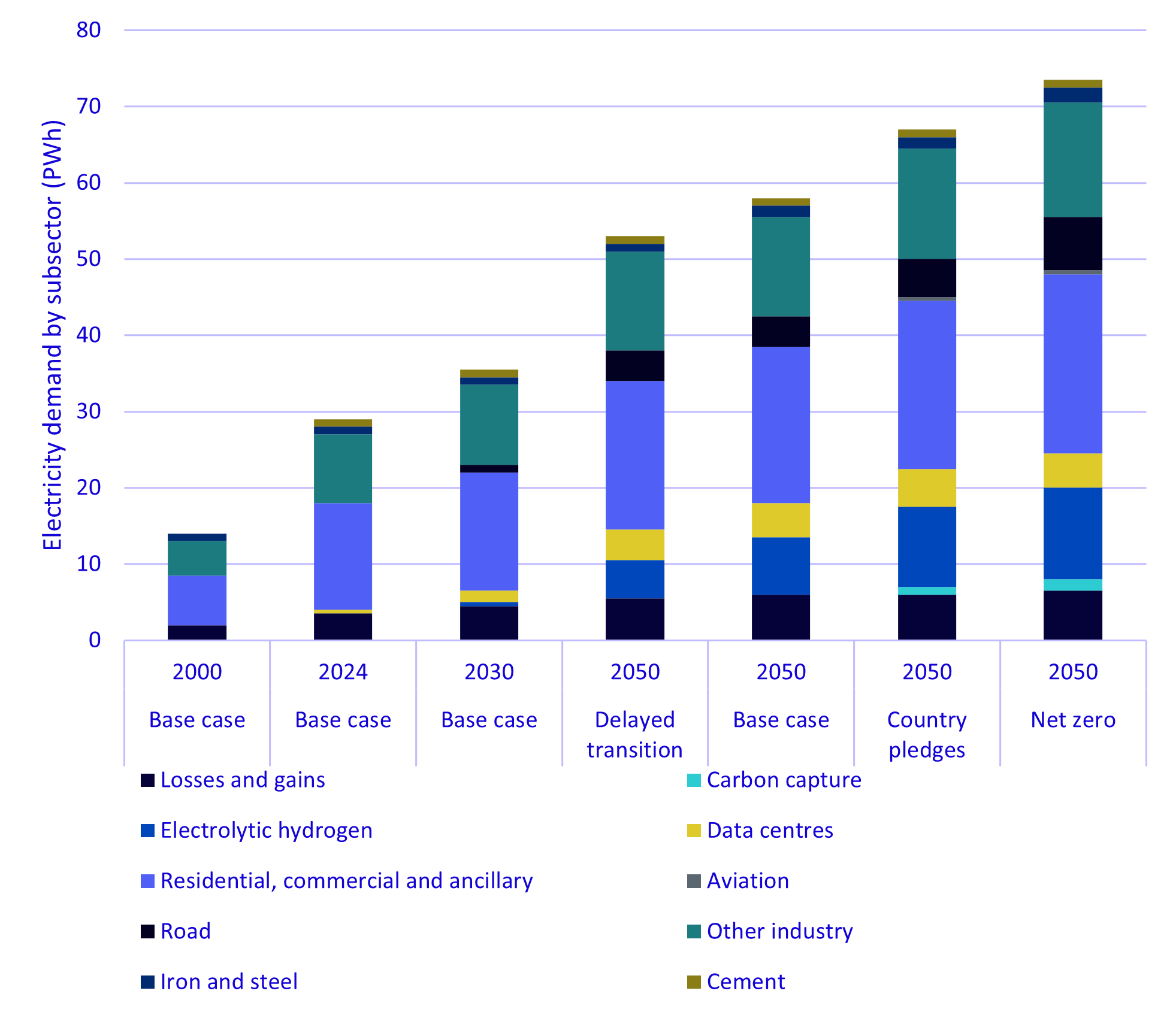
Source: Wood Mackenzie, Energy Transition Service, March 2025. Residential, commercial and ancillary does not include data centre demand, which is shown separately.
The data centre boom is particularly noteworthy. Global data centre electricity consumption could skyrocket from around 500 TWh2 to a staggering 4,500 TWh by 2030 – a nine-fold increase. This would represent 4% of global power demand by 2030, potentially soaring to 8% by 2050. It's crucial to note that this trend extends far beyond the US, as governments worldwide prioritise data sovereignty, fuelling a global data centre expansion.
Recent developments in the artificial intelligence (AI) sector underscore the potential for even greater growth. The emergence of DeepSeek, an innovative Chinese AI startup, has challenged the narrative of US AI dominance. This is likely to accelerate the globalisation of AI. But Western major tech companies like Apple, Meta, Amazon, Google, and Microsoft will maintain their commitment to over US$300 billion in capital investment for data centres by 2025.
The implications for base metals demand are profound. Copper, in particular, stands to benefit significantly from this trend. Even if AI becomes more commoditised and data centres diversify in ownership and location, the fundamental need for copper wire in these facilities remains constant.
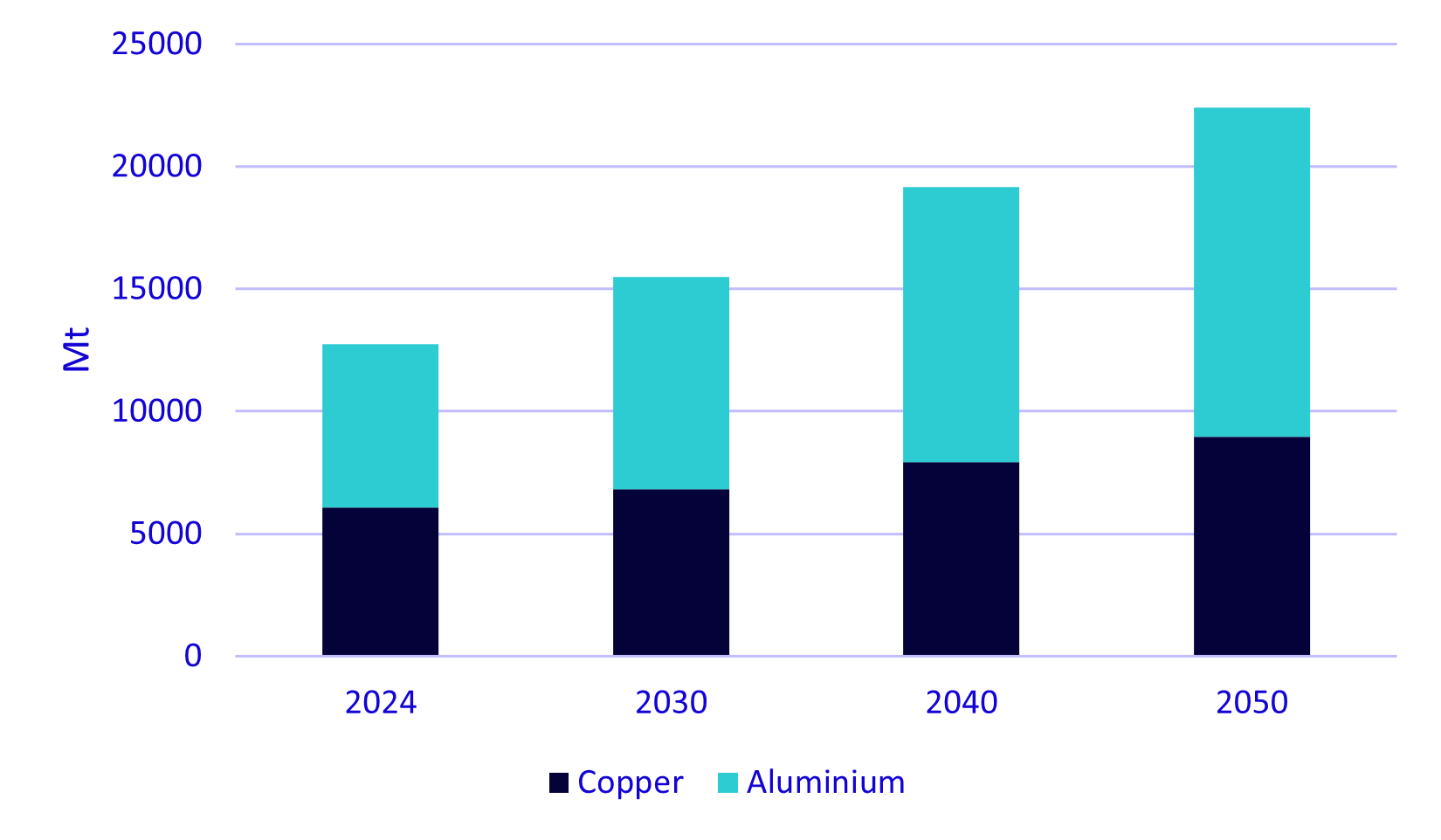
Figure 3: Metals needed for generation, transmission, and storage
Figure 3a: Metals used in clean energy technologies
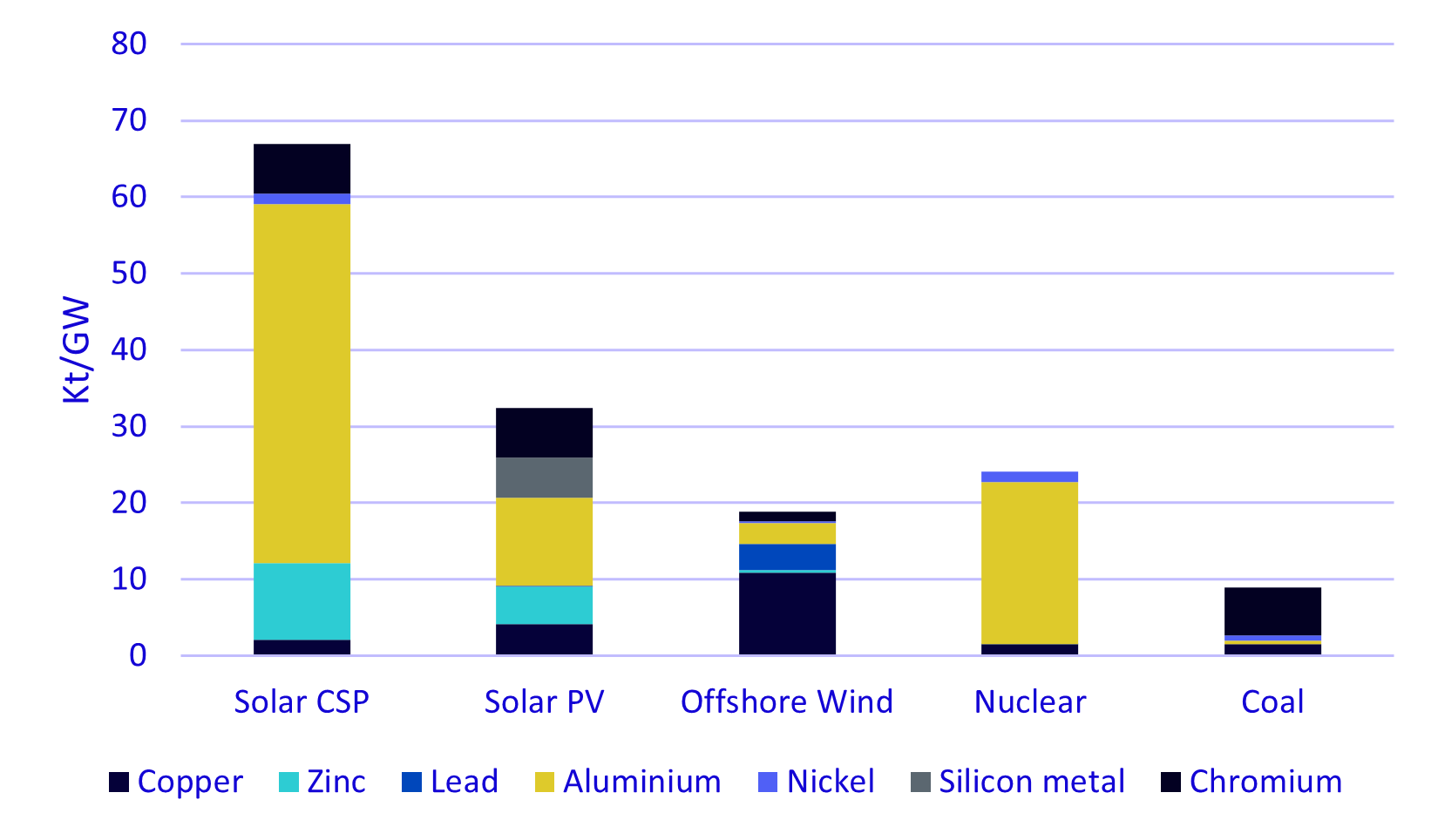
Figure 3b: Metals used in passenger ICEs and BEVs3
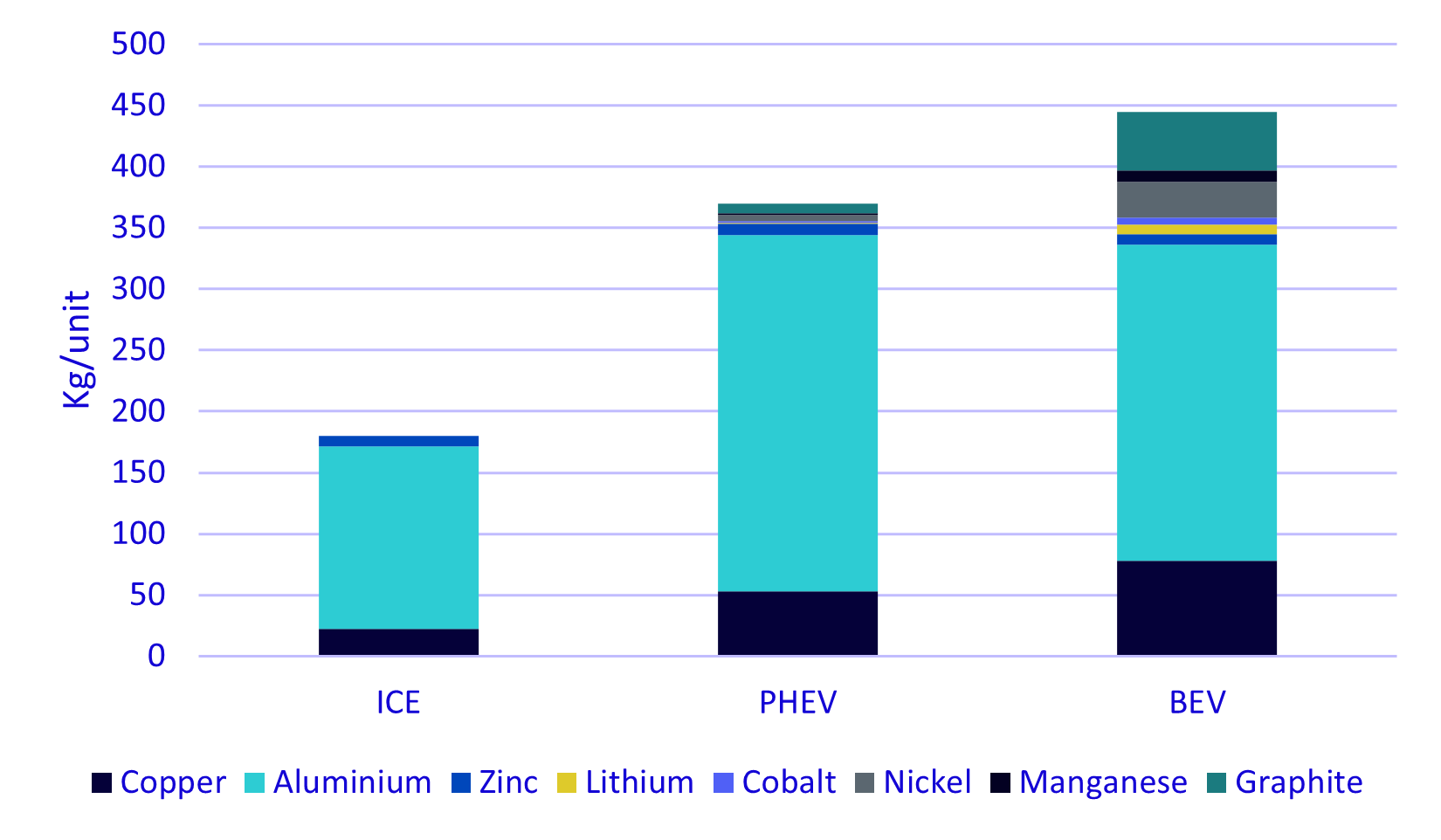
Figure 3c: Metals in transmission
However, it's important to acknowledge the downside risks. Progress towards a low-carbon energy system is faltering on multiple fronts, leaving us dangerously reliant on fossil fuels. We may be heading towards a "delayed transition" scenario – a potentially catastrophic 3°C pathway where emissions don't peak until the early 2030s.
Yet, even in this less optimistic scenario, electrification remains crucial for energy security. In our base case, electricity's share of final energy demand is projected to rise steadily from 23% in 2024 to 35% by 2050. Even in a delayed transition scenario, it would still reach 33%.
Meeting this surging demand presents significant challenges, particularly in supplying decarbonised power. Major tech companies are setting ambitious targets—Amazon aims for 100% renewable energy by 2025, while Microsoft targets carbon negativity by 2030. Achieving these goals will require a mix of renewables, extended reliance on natural gas generation in the near term, and the eventual deployment of nuclear power.
This transition will dramatically increase demand for metals. Battery-related demand is projected to increase five-fold by 2050 in our base case scenario, and a staggering ten-fold in our net-zero scenario. Achieving net-zero emissions will necessitate a US$21 trillion investment in power grids by 2050, doubling the length of transmission and distribution lines.
This rapid expansion will strain supply chains, with annual demand for copper, aluminium, and other critical components like switches and transformers for grid expansion doubling by 2035. The copper market, in particular, is expected to face significant pressure. We forecast total copper consumption to grow by 2.5% annually between 2024 and 2034, with higher copper scrap use mitigating the mine requirement to 2.0%. However, in a mature, structurally supply-constrained commodity, this represents a major challenge.
The electrical and base metals sectors are on the cusp of a new era of demand growth, driven by the electrification of the global economy and the push towards decarbonisation. This presents both opportunities and challenges for the mining industry, requiring strategic planning, substantial investment, and innovative solutions to meet the world's evolving energy needs.
1GDP = gross domestic product.
2Twh = terawatt-hour.
3ICEs = internal combustion engine; BEVs = battery electric vehicles.




 Previous Post
 All Posts